

Light & Placement
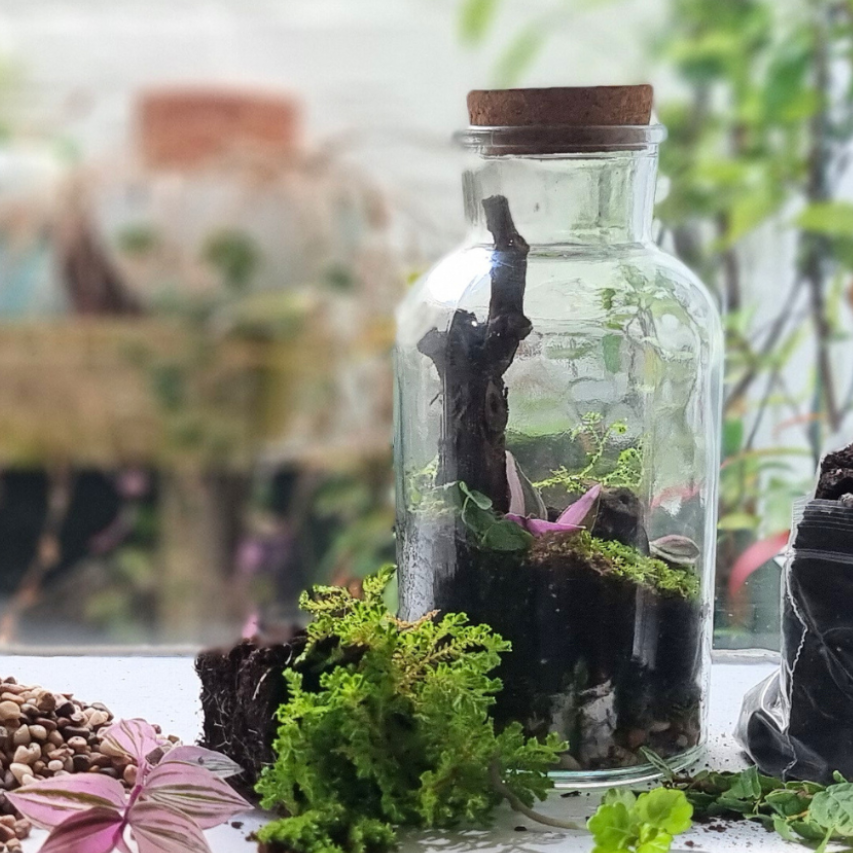
Indirect Sun Only: Place your terrarium in a spot receiving bright, indirect natural light (such as near an east- or north-facing window).
Avoid Heat Traps: Direct sunlight through glass acts like a magnifying greenhouse, raising internal temperatures rapidly and scorching foliage.
Viewing Tip: When placed near a window, natural condensation typically forms on the cooler rear glass pane, leaving the front display clear.
Moisture & Watering
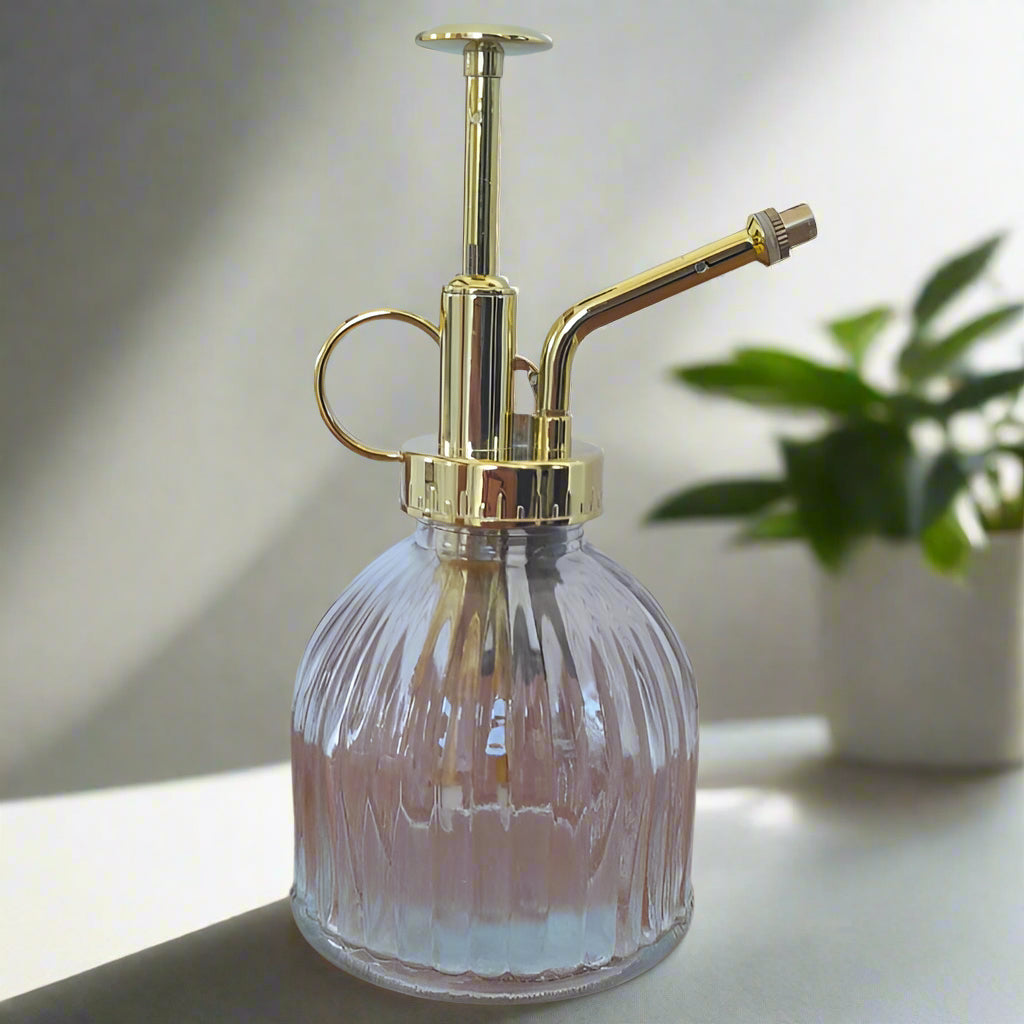
The Natural Rain Cycle: Sealed terrariums continuously recycle their internal moisture through evaporation and condensation. Keep the lid sealed to maintain this closed loop.
When to Water: If the glass remains dry for several days, moss loses its vibrant color, or the substrate turns pale, lightly mist the ecosystem using filtered, distilled, or rainwater.
Substrate Target: The soil should always feel like a well-wrung sponge—consistently damp to the touch, but never sitting in pooled standing water.
Airflow & Mold Prevention
Balancing Humidity: Excess moisture combined with stale air can occasionally cause white fuzzy mold or powdery mildew.
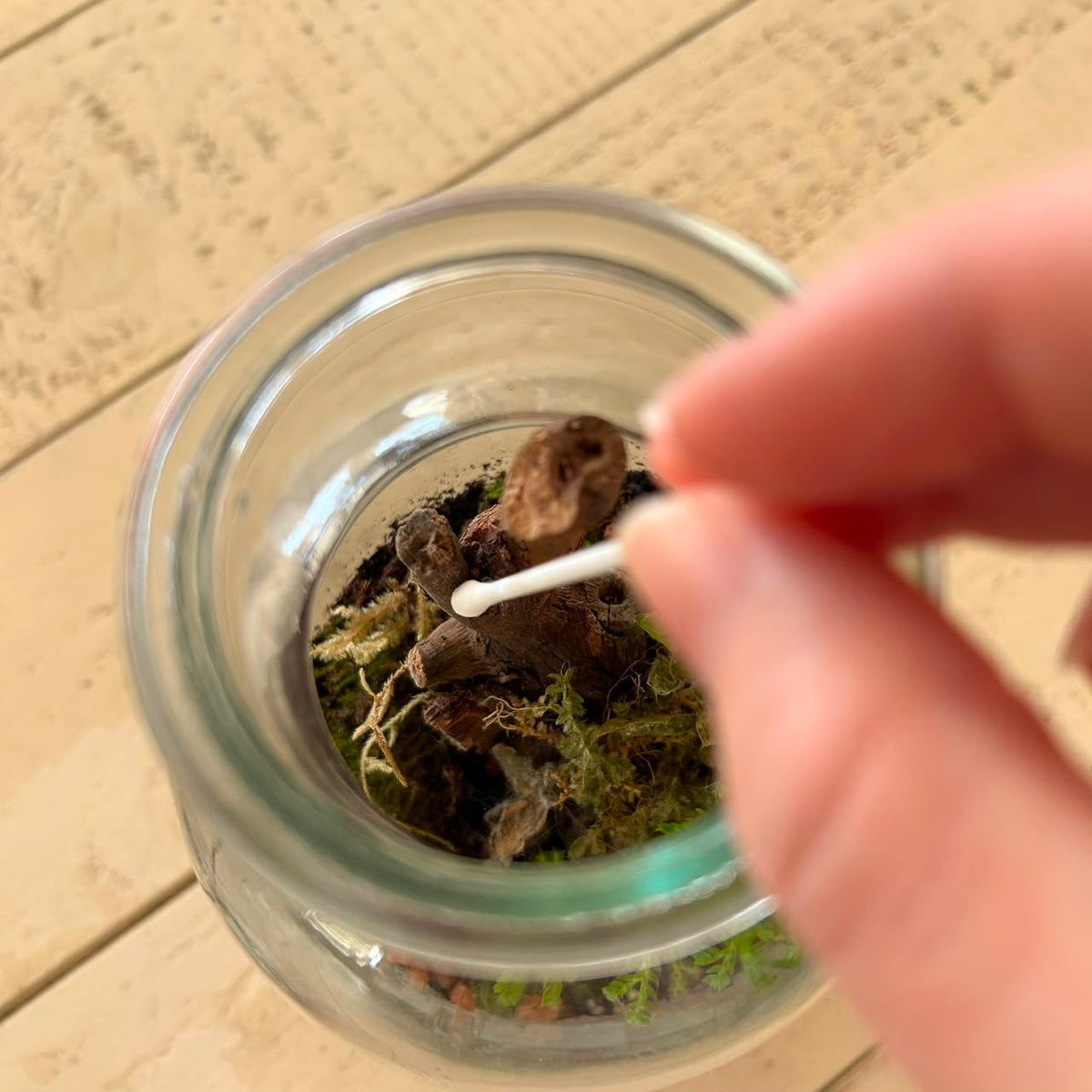
Ventilating: If mold appears, remove the lid for 12 to 24 hours to let fresh air circulate and lower humidity levels. Gently wipe away any visible spots with a clean cotton swab before resealing.
Pest Management: If common greenhouse pests appear, treat the affected area lightly with a gentle organic pesticide spray.
Pruning & Canopy Management
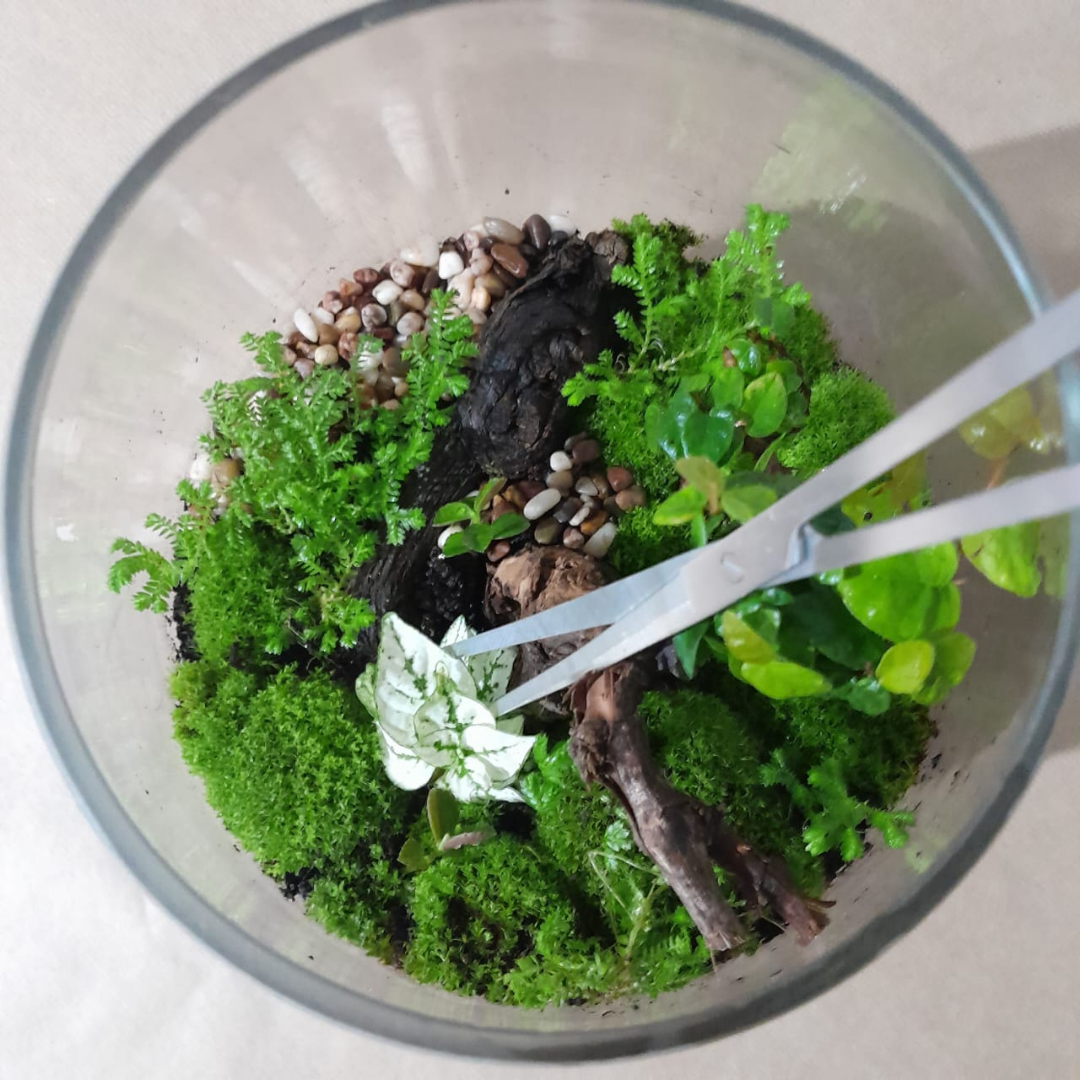
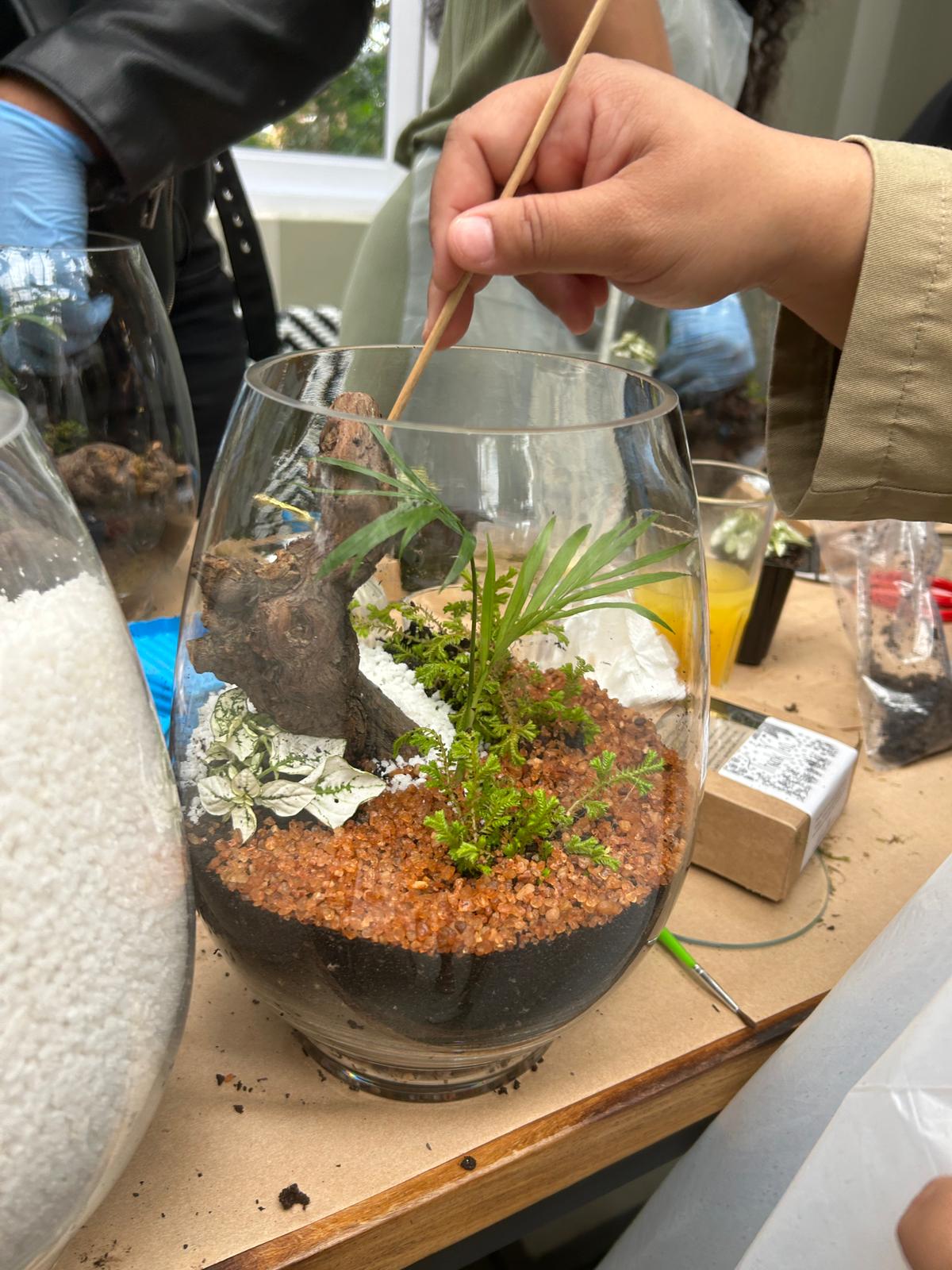
Controlling Growth: Different species grow at varying speeds. Trim back dominant stems just above a leaf node to keep the design balanced and ensure lower-growing mosses receive light.
Clear the Glass: Routinely snip back any leaves pressing flat against the wet glass walls. Constant contact with trapped condensation will cause foliage to rot over time.
Nutrients & Rejuvenation
No Fertilizer Needed: Terrariums recycle nutrients naturally as micro-foliage sheds and breaks down. Adding synthetic fertilizers can burn delicate roots and cause excessive, leggy growth.
Long-Term Refresh: After 2 to 3 years, refresh the ecosystem by lightly trimming root-bound plants, replacing the top layer of substrate, and wiping the interior glass clean.
-
Terrarium Soil Mix
Regular price From R 39.00 ZARRegular priceUnit price per -
Terrarium Glass Vase with lid
Regular price From R 159.95 ZARRegular priceUnit price per -
Terrarium Gravel
Regular price From R 19.00 ZARRegular priceUnit price per -
Soil Scoop
Regular price R 99.00 ZARRegular priceUnit price perR 0.00 ZARSale price R 99.00 ZAR -
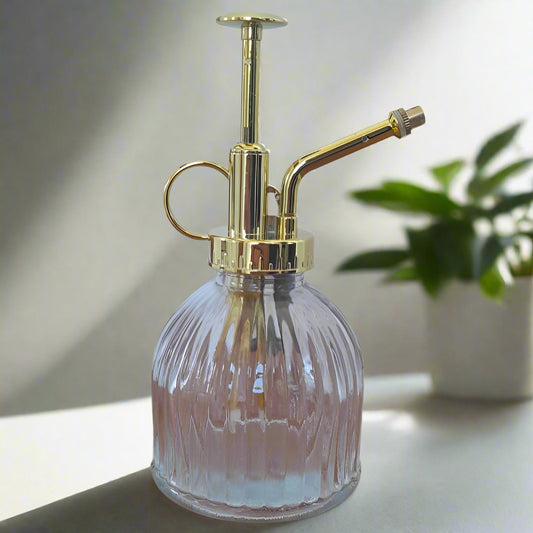
Mister Bottle
Regular price R 199.00 ZARRegular priceUnit price perR 0.00 ZARSale price R 199.00 ZAR -
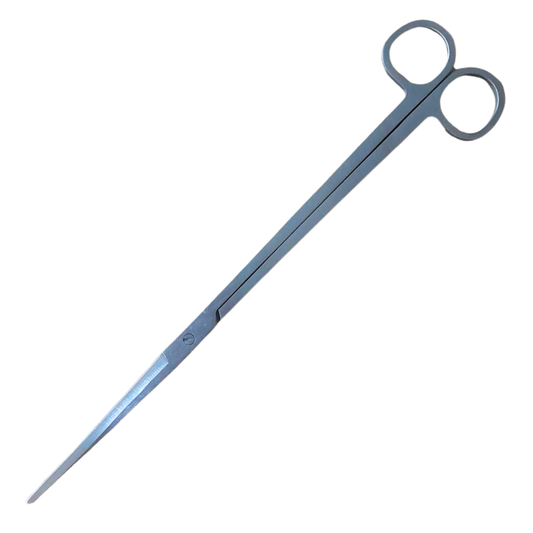
Extra Long Terrarium Pruning Scissors - Curved blade
Regular price R 249.00 ZARRegular priceUnit price perR 49.00 ZARSale price R 249.00 ZAR -
Terrarium Tweezer, straight tip - 30cm
Regular price R 139.00 ZARRegular priceUnit price perR 0.00 ZARSale price R 139.00 ZAR -
Terrarium Tweezer, slanted tip - 30cm
Regular price R 149.00 ZARRegular priceUnit price perR 0.00 ZARSale price R 149.00 ZAR -
Terrarium Workshop Gift Card
Regular price From R 795.00 ZARRegular priceUnit price per -
Terrarium Tool Kit - 5 Piece
Regular price R 795.00 ZARRegular priceUnit price perR 995.00 ZARSale price R 795.00 ZARSale -
Terrarium Plants - Sets of 3 Mixed
Regular price R 99.00 ZARRegular priceUnit price per -
Ceramic Mushroom Terrarium Decor - Set of 3
Regular price R 150.00 ZARRegular priceUnit price per




Need Personalised Advice?
Have questions about your setup or need help troubleshooting a specific plant? Reach out to us at info@elderflowernursery.co.za — we're always happy to help your terrarium flourish!